
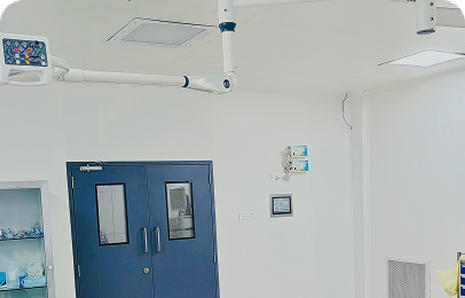
Healthcare infrastructure is evolving faster than ever. Hospitals, diagnostic centers, pharma units, and laboratories are under constant pressure to expand capacity, meet stricter compliance norms, and adapt to new technologies—all without disrupting ongoing operations. In this fast-moving environment, modular cleanrooms have emerged as a smarter, future-ready solution compared to traditional construction.
Unlike conventional cleanrooms that are fixed, time-consuming to build, and difficult to modify, modular cleanrooms are designed for speed, flexibility, and precision, making them ideal for rapidly growing healthcare facilities.
Faster Installation Without Compromising Standards
Time is critical in healthcare. Whether it’s adding a new diagnostic lab, expanding a pharmacy unit, or upgrading infection-control areas, delays directly impact patient care and revenue. Modular cleanrooms are prefabricated and assembled on-site, significantly reducing project timelines. What typically takes months with traditional construction can often be completed in weeks—without compromising ISO, GMP, or healthcare compliance standards.
Scalability That Grows With Your Facility
Healthcare needs are rarely static. Patient volumes increase, new departments are introduced, and technology upgrades become essential. Modular cleanrooms are inherently scalable, allowing facilities to expand, reconfigure, or relocate cleanroom spaces with minimal disruption. This adaptability makes them a long-term investment rather than a one-time solution.
Cost-Efficient Over the Lifecycle
While initial costs are often comparable, modular cleanrooms offer better lifecycle value. Reduced construction time lowers labor and downtime costs, and standardized components simplify maintenance and future upgrades. Over time, this results in significant savings, especially for facilities planning phased expansions.
Enhanced Infection Control and Hygiene
In healthcare environments, contamination control is non-negotiable. Modular cleanrooms are engineered with seamless panels, controlled airflow systems, and integrated solutions like laminar air flow, cleanroom lighting, and specialized flooring. These features help maintain sterile conditions consistently, supporting infection prevention and patient safety.
Minimal Disruption to Ongoing Operations
One of the biggest advantages of modular cleanrooms is their ability to be installed with minimal disturbance to active hospital or lab environments. Noise, dust, and construction debris are drastically reduced, allowing healthcare facilities to continue functioning smoothly during upgrades or expansions.
Future-Ready Infrastructure
As healthcare regulations and technologies continue to evolve, facilities need infrastructure that can keep pace. Modular cleanrooms are designed to integrate new systems, equipment, and compliance requirements without requiring complete reconstruction. This future-readiness makes them a strategic choice for forward-thinking healthcare providers.
Conclusion
For fast-growing healthcare facilities, modular cleanrooms offer the perfect balance of speed, flexibility, compliance, and long-term value. They enable healthcare providers to expand intelligently, maintain the highest hygiene standards, and stay prepared for future demands. In a sector where precision and adaptability matter most, modular cleanrooms are not just an option—they are the smart choice.
Add a Comment