
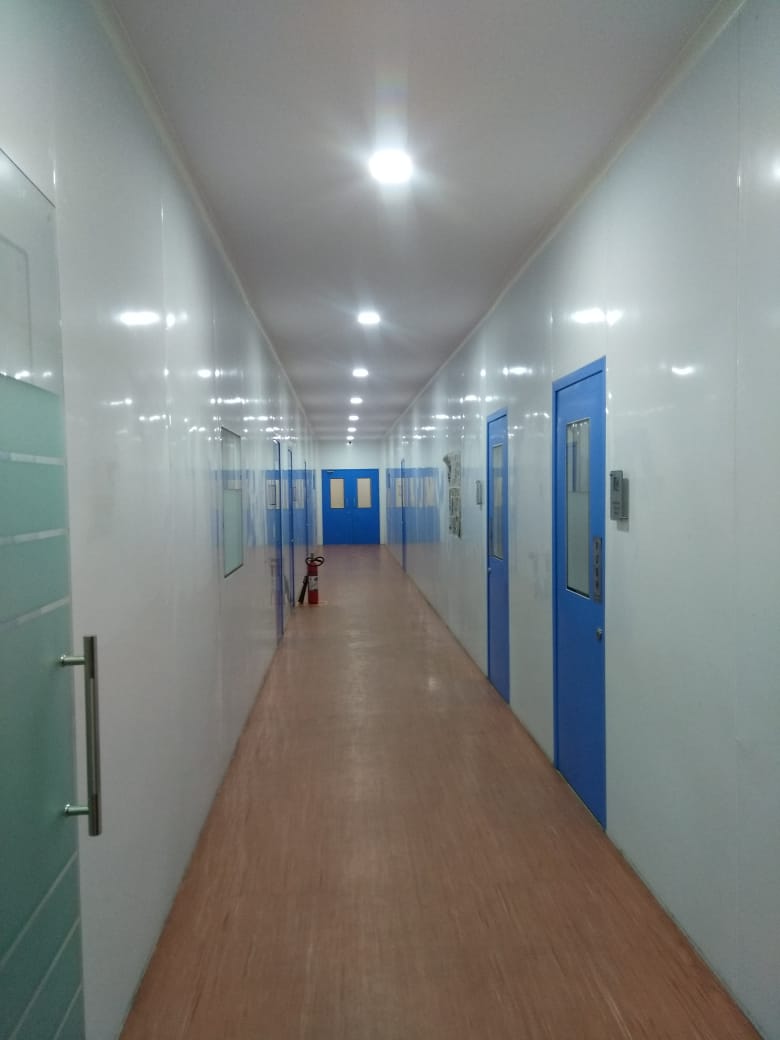
In modern cleanroom environments, efficiency is no longer limited to performance alone. Serviceability, uptime, and long-term maintenance access have become just as critical—especially for hospitals, pharmaceutical plants, and high-compliance laboratories. This is where Walk-On Ceiling Systems are redefining cleanroom design.
Unlike conventional ceiling systems that require shutdowns and dismantling for maintenance, walk-on ceilings allow technicians to access services from above the cleanroom, without disturbing the controlled environment below.
What Is a Walk-On Ceiling System?
A walk-on ceiling system is a structurally reinforced cleanroom ceiling designed to safely support human load. It allows maintenance personnel to walk over the ceiling to access AHUs, ducting, electrical lines, lighting fixtures, and filtration systems—without entering the cleanroom space.
This design is especially valuable in areas where continuous operation and contamination control are non-negotiable.
Why Traditional Ceiling Access Is No Longer Enough
In conventional cleanroom setups, even minor ceiling maintenance often leads to:
Production or OT downtime
Increased contamination risk
Re-validation and cleaning costs
Operational delays
As cleanroom standards become stricter and facilities scale faster, these inefficiencies are no longer acceptable. Walk-on ceiling systems eliminate these issues by shifting service access to the technical zone above.
Key Advantages of Walk-On Ceiling Systems
Walk-on ceilings significantly improve cleanroom functionality by allowing maintenance without disrupting operations. They help maintain pressure integrity, airflow balance, and cleanliness levels while reducing downtime.
From a compliance perspective, they support GMP, NABH, ISO, and WHO guidelines by minimizing human movement inside controlled areas.
They also improve long-term cost efficiency. While the initial engineering is more precise, the reduction in shutdowns, maintenance delays, and contamination-related risks delivers a strong ROI over the facility’s lifecycle.
Ideal Applications in Healthcare & Pharma
Walk-on ceiling systems are increasingly becoming standard in:
Modular Operation Theatres
ICUs and isolation wards
Pharmaceutical manufacturing cleanrooms
Biotechnology and diagnostic labs
R&D and sterile processing units
In critical healthcare environments, where even minutes matter, these systems provide uninterrupted functionality.
Engineering That Makes the Difference
A reliable walk-on ceiling is not just about strength—it’s about precision engineering. Load-bearing capacity, panel integration, sealing, vibration control, and compatibility with lighting, filters, and AHU systems must all work in harmony.
At AUM Industries, walk-on ceiling systems are designed as part of a complete cleanroom ecosystem—ensuring seamless integration with flush panels, laminar airflow systems, and modular infrastructure.
The Future of Cleanroom Design
As healthcare and pharmaceutical facilities move toward smarter, faster, and more scalable infrastructure, walk-on ceiling systems are no longer a luxury—they are a necessity.
They represent a shift from reactive maintenance to proactive, service-friendly cleanroom design, supporting higher efficiency, better compliance, and uninterrupted operations.
Final Thoughts
Cleanrooms are built for control—but the future belongs to those designed for control plus accessibility. Walk-on ceiling systems deliver both, making them a cornerstone of next-generation cleanroom infrastructure.
If you’re planning a new cleanroom or upgrading an existing facility, investing in a serviceable ceiling system today can prevent major operational challenges tomorrow.
AUM Industries delivers engineered walk-on ceiling solutions that align with global cleanroom standards—built for performance, durability, and zero compromise.
Add a Comment