
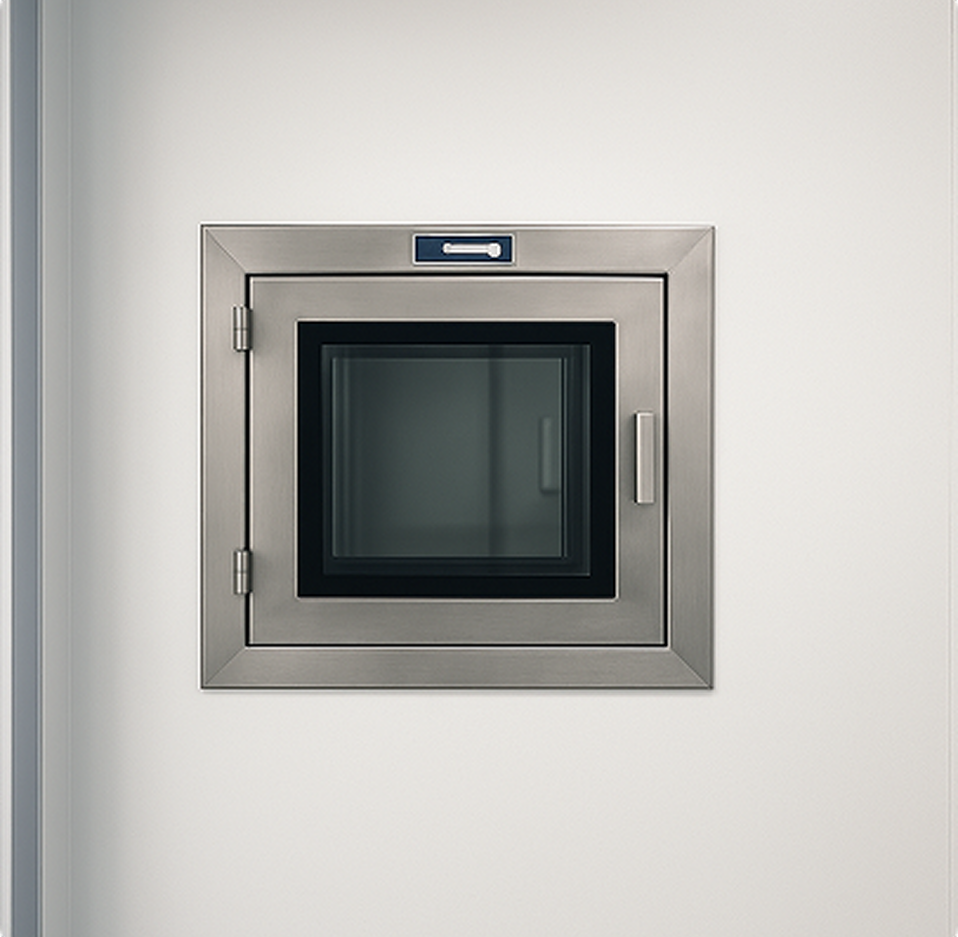
In controlled environments like cleanrooms, even the smallest contamination can compromise product quality, patient safety, and regulatory compliance. One of the most critical yet often overlooked components in maintaining cleanliness is the Pass Box. Designed to transfer materials between different cleanroom zones without allowing contaminants to enter, pass boxes play a vital role in ensuring operational efficiency and sterility.
At AUM Industries, we understand that precision engineering and smart design are essential to maintaining cleanroom integrity.
What Is a Pass Box?
A Pass Box is a sealed enclosure installed between two cleanroom areas (or between a cleanroom and a non-cleanroom space) to safely transfer materials without human movement between zones.
This reduces:
- Cross-contamination risks
- Airborne particle transfer
- Human traffic inside critical areas
Types of Pass Boxes
Depending on the level of contamination control required, pass boxes are designed in different configurations:
1. Static Pass Box
- Used between two clean areas of the same classification
- No airflow or filtration system
- Ideal for basic material transfer
2. Dynamic Pass Box
- Equipped with HEPA filters and airflow systems
- Maintains clean air circulation inside the chamber
- Suitable for high-grade cleanrooms like pharma and hospitals
3. UV Pass Box
- Includes UV light for microbial disinfection
- Ensures additional sterilization before transfer
- Commonly used in microbiology labs and sterile environments
Key Design Features That Ensure Safety
Interlocking Door System
Both doors cannot be opened at the same time, preventing direct air exchange between zones.
HEPA Filtration (in dynamic pass boxes)
High-efficiency filters remove airborne particles and maintain cleanliness standards.
Airflow Control
Ensures unidirectional or controlled airflow to minimize contamination risk.
Durable & Non-Contaminating Materials
Typically made from stainless steel or powder-coated surfaces that are easy to clean and corrosion-resistant.
UV Sterilization (optional)
Kills microorganisms and enhances safety for critical transfers.
Why Pass Box Design Matters
A poorly designed pass box can:
- Compromise cleanroom classification
- Increase contamination risks
- Lead to regulatory non-compliance
- Impact product quality and patient safety
On the other hand, a well-engineered pass box ensures:
- Controlled material flow
- Reduced human intervention
- Enhanced operational efficiency
- Compliance with cleanroom standards
Applications Across Industries
Pass boxes are widely used in:
- Pharmaceutical manufacturing
- Hospitals and modular OTs
- Biotechnology labs
- Food processing units
- Electronics and semiconductor industries
Wherever contamination control is critical, pass boxes become an essential part of the infrastructure.
Best Practices for Using Pass Boxes
- Always ensure proper door interlocking before operation
- Regularly clean and disinfect the chamber
- Replace HEPA filters as per maintenance schedule
- Use UV systems correctly with safety precautions
- Train staff for standard operating procedures
Why Choose AUM Industries
AUM Industries delivers precision-engineered pass box solutions designed for high-performance cleanroom environments. With a focus on quality, durability, and compliance, our systems are tailored to meet the stringent requirements of healthcare and pharma industries.
From design to installation, we ensure every component supports contamination control and operational efficiency.
Conclusion
In cleanroom environments, safety is built through every small detail—and pass boxes are a critical part of that system. Investing in the right pass box design not only protects your environment but also ensures long-term reliability, compliance, and performance.
For organizations aiming to maintain the highest standards of cleanliness and efficiency, a well-designed pass box is not optional—it is essential.
Add a Comment