
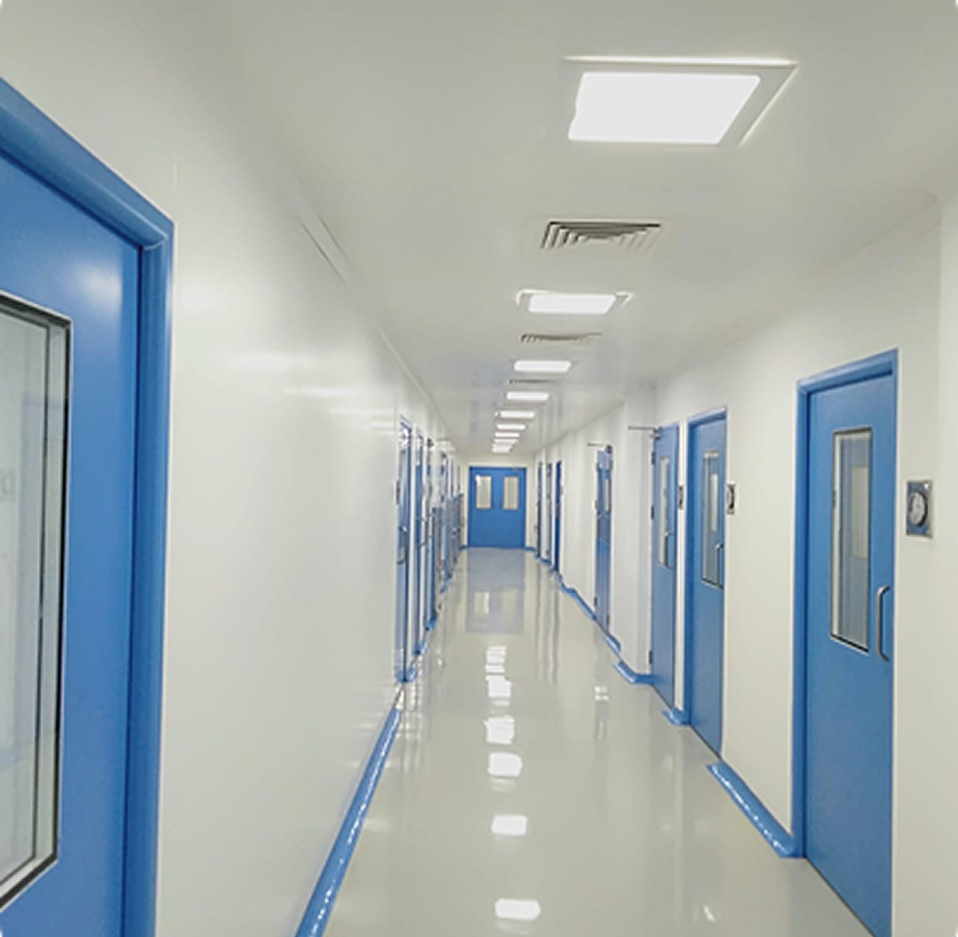
In cleanrooms, pharmaceutical facilities, laboratories, and modular operation theatres, air quality is non-negotiable. At the heart of contamination control lies the HEPA Box—a critical terminal filtration unit designed to deliver ultra-clean air. However, not all HEPA boxes perform the same. A high-performance HEPA box is defined by the quality and integration of its components.
This blog breaks down the key components that make a HEPA box efficient, reliable, and compliant with global cleanroom standards.
- HEPA Filter (The Core Filtration Element)
The HEPA filter is the most critical component of the HEPA box. It is designed to capture 99.97% of airborne particles ≥0.3 microns, including dust, microbes, and contaminants.
Key features of a high-quality HEPA filter:
High filtration efficiency (H13 or H14 grade)
Uniform airflow distribution
Low pressure drop for energy efficiency
Long operational life with consistent performance
A poor-quality filter can compromise the entire cleanroom environment, making filter selection crucial.
- Housing / Casing Structure
The housing encloses the HEPA filter and ensures airtight operation. In high-performance HEPA boxes, the housing is typically fabricated from powder-coated GI, stainless steel, or aluminum, depending on application requirements.
Why housing quality matters:
Prevents air leakage
Ensures structural durability
Supports easy installation and maintenance
Resists corrosion and microbial growth
Precision-fabricated housing plays a major role in maintaining pressure integrity and compliance.
- Gel Seal or Gasket Seal System
The sealing mechanism ensures that unfiltered air does not bypass the HEPA filter.
Two common sealing systems:
Gel Seal: Provides superior airtight sealing and is preferred in pharmaceutical and critical sterile areas
Gel Seal: Provides superior airtight sealing and is preferred in pharmaceutical and critical sterile areas
A reliable seal system is essential to pass DOP/PAO integrity tests and maintain contamination control.
- Diffuser Plate / Perforated Face Screen
The diffuser plate evenly distributes filtered air into the cleanroom.
Functions of the diffuser:
Eliminates turbulence
Ensures uniform airflow
Enhances cleanroom comfort
Maintains laminar airflow conditions where required
A well-designed diffuser directly impacts airflow stability and room classification.
- Air Volume Control Damper (Optional but Important)
An air volume control damper allows precise regulation of airflow entering the cleanroom.
Benefits include:
Accurate airflow balancing
Improved pressure control between rooms
Enhanced energy efficiency
Simplified commissioning and validation
This component is especially important in facilities with multiple cleanroom zones.
- Test Ports for Integrity Testing
High-performance HEPA boxes include upstream and downstream test ports to facilitate integrity testing.
Why test ports are essential:
Enable DOP/PAO testing
Ensure compliance with GMP and ISO standards
Ensure compliance with GMP and ISO standards
Without proper test ports, regular validation becomes difficult and non-compliant.
- Pressure Differential Gauge / Port
A pressure differential gauge or port helps monitor filter loading over time.
Its role includes:
Indicating filter blockage
Planning timely filter replacement
Maintaining consistent airflow
Preventing unexpected performance failure
This component supports preventive maintenance and long-term reliability.
Why Component Quality Matters
Each component of a HEPA box works together to deliver clean, controlled airflow. Inferior materials, poor sealing, or inadequate testing access can result in:
Failed audits
Increased contamination risk
Higher operating costs
Frequent maintenance issues
A high-performance HEPA box is an investment in compliance, safety, and operational efficiency.
HEPA Boxes by AUM Industries
At AUM Industries, HEPA boxes are designed and fabricated with a focus on:
GMP & ISO compliance
GMP & ISO compliance
In-house mechanical fabrication
Long-term performance and easy maintenance
Our solutions are tailored for pharmaceutical plants, cleanrooms, modular OTs, ICUs, and critical healthcare environments.
Add a Comment