
When people think about HVAC performance, they often focus on major components like Air Handling Units (AHUs), filters, or chillers.
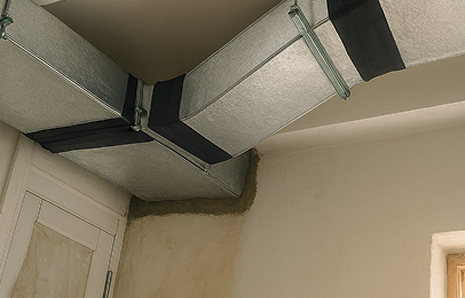
But there’s one critical element that quietly determines how well the entire system performs—fabricated ducting.
Ducting is not just a pathway for air. It’s the backbone of your HVAC system. And when its quality is compromised, the entire system suffers—no matter how advanced your equipment is.
The Role of Fabricated Ducting in HVAC Systems
Fabricated ducting is responsible for distributing conditioned air across cleanrooms, hospitals, pharma units, and industrial spaces.
It ensures:
- Uniform airflow
- Proper pressure balance
- Contamination control (especially in cleanrooms)
- Energy-efficient operation
In short, even the best HVAC system is only as effective as its ducting network.
How Poor Ducting Quality Affects Performance
1. Air Leakage = Energy Loss
Low-quality duct fabrication often leads to leakages at joints and seams.
This results in:
- Loss of conditioned air
- Increased energy consumption
- Reduced cooling/heating efficiency
Over time, this significantly increases operational costs.
2. Uneven Air Distribution
Improper duct design or poor fabrication can disrupt airflow balance.
This leads to:
- Hot and cold spots
- Inconsistent temperature control
- Poor comfort levels
In critical environments like cleanrooms, this can directly impact product quality.
3. Contamination Risks
In pharma and healthcare setups, ducting must maintain strict hygiene standards.
Poor-quality ducting can:
- Accumulate dust and particles
- Allow external contaminants to enter
- Compromise cleanroom classifications
This is a serious risk for GMP-compliant facilities.
4. Pressure Imbalance Issues
HVAC systems rely on precise pressure control, especially in cleanrooms and OTs.
Faulty ducting can:
- Disrupt pressure differentials
- Affect laminar airflow performance
- Increase the risk of cross-contamination
5. Noise & Vibration Problems
Substandard ducting often lacks proper reinforcement and insulation.
This can cause:
- Excessive noise
- Vibrations across the system
- Reduced lifespan of HVAC components
What Defines High-Quality Fabricated Ducting?
At AUM Industries, quality ducting is engineered—not just manufactured.
Here’s what makes the difference:
✔ Precision Fabrication
Accurate dimensions ensure proper airflow and minimal losses.
✔ Leak-Proof Joints
High-quality sealing techniques prevent air leakage.
✔ Durable Materials
Use of corrosion-resistant materials increases lifespan and reliability.
✔ Smooth Internal Finish
Reduces friction and improves airflow efficiency.
✔ Compliance with Standards
Designed to meet industry norms for cleanrooms, hospitals, and pharma units.
Why It Matters More in Cleanrooms & Healthcare
In environments like:
- Cleanrooms
- Modular Operation Theatres
- ICUs
- Pharma manufacturing units
…HVAC performance is directly linked to safety, compliance, and outcomes.
Even a small ducting flaw can lead to:
- Audit failures
- Contamination risks
- Operational inefficiencies
That’s why ducting quality is not optional—it’s critical.
The Bigger Picture: System Performance = Ducting Quality
Think of your HVAC system like a human body.
If the lungs (AHU) are strong but the arteries (ducts) are weak, the system cannot function properly.
Investing in high-quality fabricated ducting ensures:
- Better performance
- Lower energy costs
- Long-term reliability
- Compliance with industry standards
Conclusion
Fabricated ducting may not be the most visible part of your HVAC system, but it is one of the most important.
Cutting corners here can compromise the entire setup.
On the other hand, investing in precision-engineered ducting can elevate your system’s efficiency, safety, and lifespan.
At AUM Industries, we design and deliver fabricated ducting solutions that ensure optimal airflow, compliance, and performance—because every detail matters when it comes to critical environments.
Need help with HVAC or ducting solutions?
Get in touch with AUM Industries for end-to-end cleanroom and HVAC expertise.
Add a Comment