
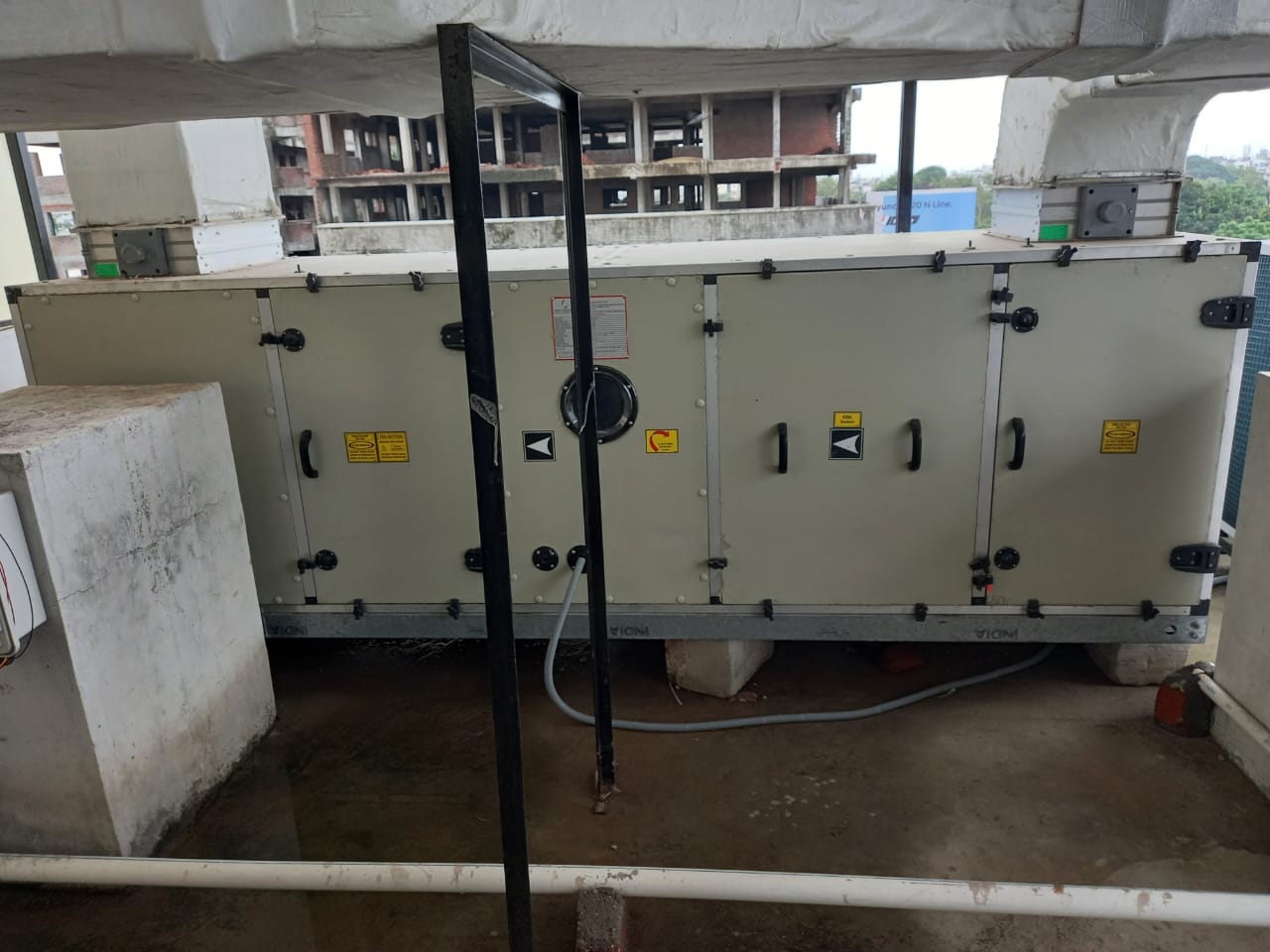
In pharmaceutical manufacturing and healthcare environments, contamination control is not optional — it is critical. Airborne particles, microbes, and cross-contamination can compromise product quality, patient safety, and regulatory compliance.
This is where a well-designed Air Handling Unit (AHU) and HVAC system becomes the backbone of a controlled environment.
Why Air Handling Matters in Controlled Environments
In cleanrooms and modular OTs, air is both a risk and a solution. Every movement of people, materials, or equipment generates particles. Without controlled airflow, these contaminants circulate freely, increasing the risk of product rejection or hospital-acquired infections.
Key Components That Prevent Contamination
A contamination-resistant air system is built on engineering precision.
- HEPA Filtration High-Efficiency Particulate Air (HEPA) filters remove up to 99.97% of particles as small as 0.3 microns. This is essential in pharmaceutical cleanrooms and operation theatres where sterility is mandatory.
- Pressure Differentials Maintaining positive pressure in clean zones prevents contaminated air from entering. In contrast, negative pressure rooms are used for isolation areas to contain harmful pathogens.
- Air Changes Per Hour (ACH) The number of times air is replaced within a space directly impacts contamination control. Higher ACH reduces particle concentration and maintains cleanroom classification standards.
- Laminar Air Flow Systems Unidirectional airflow minimizes turbulence and sweeps contaminants away from critical zones, especially in sterile manufacturing and surgical procedures.
Regulatory Compliance and GMP Standards
Regulatory bodies such as WHO-GMP, US FDA, and NABH require strict environmental control in pharma and healthcare facilities. Proper AHU design ensures compliance with:
ISO cleanroom classifications
Temperature and humidity standards
Airborne particle limits
Cross-contamination prevention protocols
Non-compliance can result in failed audits, product recalls, or operational shutdowns.
The Role of Engineering Expertise
Air handling is not just about installing equipment; it is about system integration. Ducting design, return air strategy, filter placement, and airflow validation all determine performance.
A turnkey cleanroom infrastructure partner ensures that every component — from AHU to walk-on ceilings and cleanroom partitions — works together to maintain contamination-free conditions.
Conclusion
Contamination prevention begins with air control. A properly designed and validated air handling system protects products, patients, and compliance standards.
In pharmaceutical and healthcare environments, investing in advanced AHU and HVAC systems is not an expense — it is a safeguard for quality and reputation.
At AUM Industries, we engineer end-to-end cleanroom and air handling solutions designed for precision, purity, and performance.
Add a Comment